


There is a moment during every festival in Uzbekistan when the boundaries between traveler and local quietly dissolve. It might happen around a massive iron cauldron of sizzling plov in Samarkand, or beside a pyramid of sun-warmed melons in Khiva, or in a small workshop in Namangan where a ceramicist places a freshly glazed bowl in your hands and smiles. That moment — unscripted and genuine — is what separates a good trip from the kind of journey you remember for the rest of your life.
Uzbekistan has always been a destination of extraordinary depth: ancient Silk Road cities, magnificent tilework, some of the warmest hospitality in the world, and a culinary tradition that rivals anything in the Mediterranean or Middle East. But what many travelers still don’t realize is that this country celebrates its heritage through a remarkable calendar of festivals — events that bring together food, music, craftsmanship, and community in ways that no museum or monument can replicate.
From the sweetest melon you will ever taste to the most spectacular display of handmade textiles you have ever seen, the festivals of 2026 offer cultural travelers an extraordinary reason to visit. Here is your guide to the celebrations that are drawing an increasing number of discerning visitors to the heart of Central Asia.
The International Melon Festival — Khiva
Qovun Sayli — The Melon Festival
7–9 August 2026 | Ichan Kala and Arda Khiva, Khiva, Khorezm Region
If someone told you that one of the world’s most joyful food festivals takes place inside a medieval walled city along the ancient Silk Road, you might suspect they were exaggerating. They are not.
Every August, the ancient city of Khiva transforms into a celebration of Uzbekistan’s most cherished summer fruit. The country grows more than 160 varieties of melon — from the elongated, honey-sweet torpedo to the intensely aromatic amiri and the creamy-fleshed gurvak — and the Melon Festival brings them all together in a spectacle of color, flavor, and pride.
Farmers from every region of Uzbekistan arrive with their finest specimens, arranged in towering displays that compete for both taste and artistry. Melon-carving artists transform ordinary fruit into breathtaking sculptures — flowers, animals, miniature minarets — using techniques passed through generations. The courtyards and lanes of the Ichan Kala fill with folk music, traditional dance troupes, puppet shows, exhibitions of national dress, and stalls selling Khorezm’s famous green-noodle shiveet oshi alongside freshly baked breads and handcrafted goods.
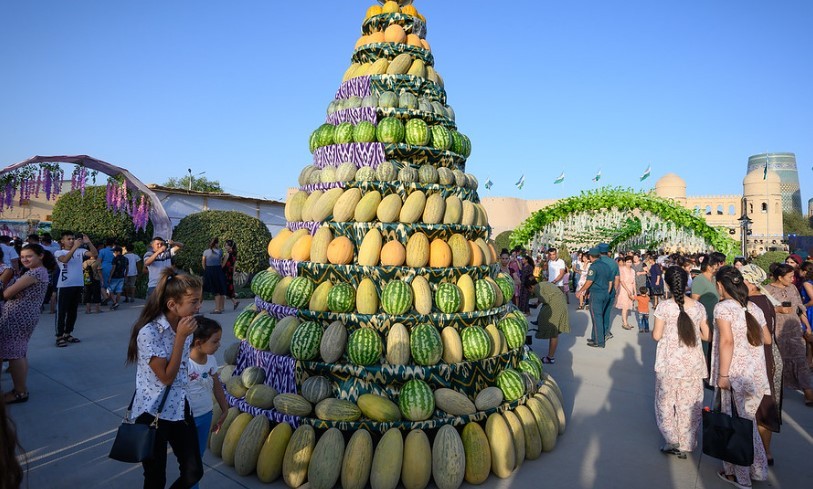
A spectacular tower of melons and watermelons rises before the ancient minarets of Khiva during the Qovun Sayli — the International Melon Festival.
Why It Matters
The Melon Festival is far more than a tasting event. It is a celebration of the ancient agricultural knowledge that has sustained communities in this arid, sun-drenched landscape for centuries. Uzbekistan’s melons appear in the accounts of medieval travelers, were carried by caravan across Silk Road trade routes, and were sent as gifts to foreign courts. To share a melon with a stranger here is an act of hospitality as old as the trade routes themselves. Arrive before the busiest hours of the festival and you will find farmers offering slices to passersby from shaded stalls — a quiet generosity that says more about Uzbek culture than any guidebook ever could.
The Samarkand Plov Festival
International Samarkand Plov Festival
August 2026 | Samarkand (multiple venues including Registan Square area)
Plov is not simply a dish in Uzbekistan. It is a philosophy, a social institution, and the subject of fierce regional pride. Every valley, every city, every family guards its own ratio of fat to rice, its own sequence of carrots and onions, its own method of burying whole garlic heads in the steaming grain. The traditional festive plov is cooked by men — often a designated master, an oshpaz — in enormous cast-iron kazan cauldrons for hundreds of guests, with recipes passed from father to son.
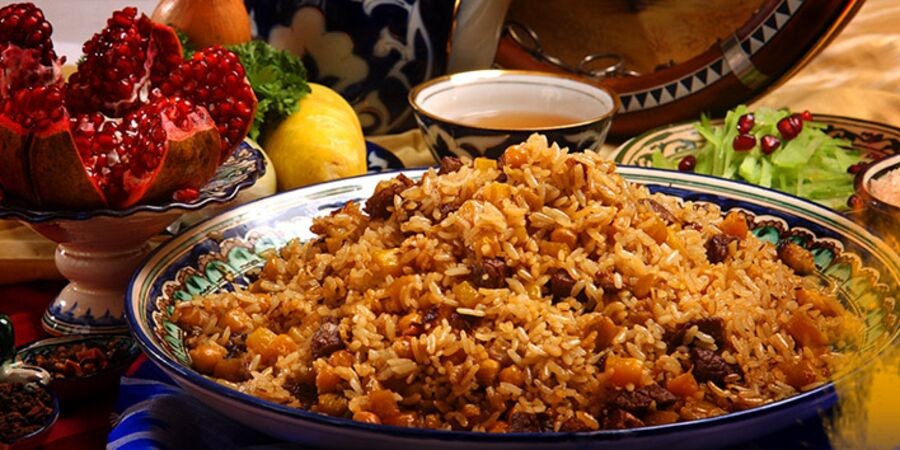
The golden perfection of traditional Uzbek plov — fragrant rice layered with tender meat, golden carrots, chickpeas, and raisins, served alongside pomegranate and freshly brewed tea.
The Samarkand Plov Festival gathers master chefs from across the country to cook their regional specialties side by side. Samarkand’s own version is distinctive: layered rather than mixed, with rice steamed over a base of meat, golden carrots, chickpeas, and raisins, resulting in a lighter, more elegant dish than the robust, fat-rich plov of the Fergana Valley. The festival’s grand finale features the live preparation of several tons of traditional plov — a spectacle of skill, heat, and communal celebration that draws enormous crowds.
“If you’re rich, eat plov. If you’re poor, eat only plov.” — Uzbek proverb
For the culturally curious traveler, the Plov Festival is a window into something profound: the way food in Central Asia is not merely sustenance but ceremony, identity, and an expression of community that stretches back centuries along the Silk Road.
The Grape Festival — Fergana Valley
Uzum Bayrami — Grape Harvest Festival
Late August – Early September | Fergana Valley and Tashkent
Late summer brings the vineyards of the Fergana Valley to life. Enclosed by the soaring ranges of the Tien Shan and Pamir-Alay mountains, this fertile crescent has been one of Central Asia’s great agricultural heartlands for millennia — and its grape harvest is one of the sweetest seasons of the year.
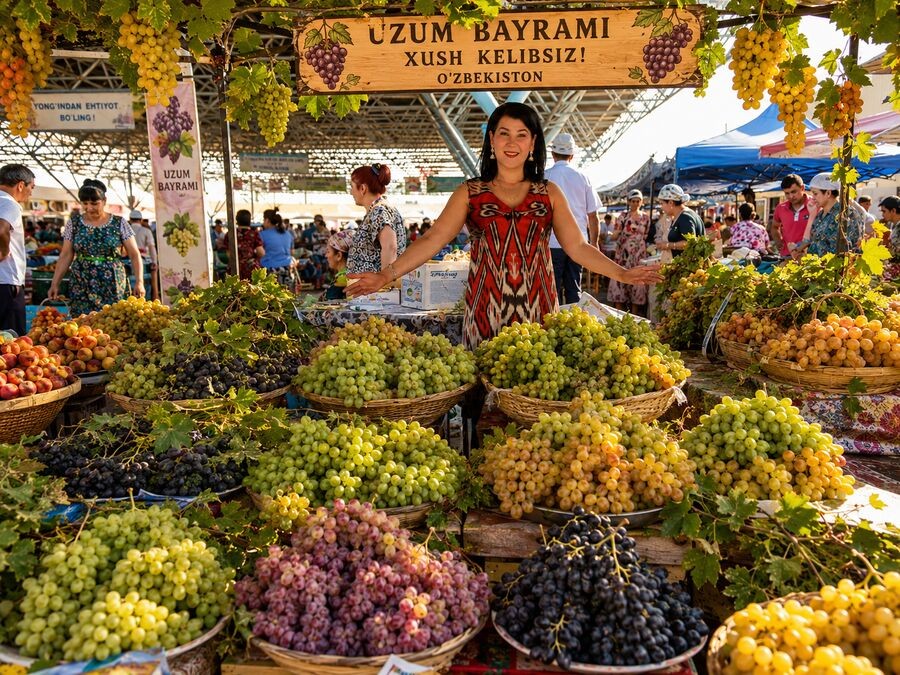
Zulya Rajabova at the Uzum Bayrami, surrounded by an abundance of grape varieties — green, red, black, and golden — freshly harvested from the Fergana Valley.
The Grape Festival invites visitors to walk through the vineyards, meet local farming families, and taste dozens of grape varieties alongside fresh and dried fruits, local wines, and regional dishes. It is an unhurried, generous celebration of the land itself — the kind of experience that reminds you why agricultural traditions are worth preserving, and why the simple act of picking fruit in a sunlit valley with a local farmer can become one of the most memorable moments of a journey.
From Vineyard to Table
What makes the Grape Festival special for travelers is the access it provides to a way of life rarely seen by outsiders. Meet local farmers who have cultivated these same slopes for generations. Walk through vineyards heavy with fruit. Discover traditional harvesting techniques, taste grape varieties you won’t find anywhere else in the world, and enjoy the warm, family-style hospitality that defines rural Uzbekistan. This is not a wine expo — it is a living, breathing celebration of the earth and the people who tend it.
Gastro Bazaar — Tashkent
Gastro Bazaar International Gastronomic Festival
September 2026 | Tashkent
Imagine traveling through the entire country without leaving a single city. That is the promise of Gastro Bazaar, Tashkent’s ambitious international gastronomic festival, which brings together the culinary traditions of every region of Uzbekistan in one spectacular event.
From the mountain dishes of the Surkhandarya to the refined pilafs of Samarkand, from the fiery flavors of Fergana to the dried-fruit-laced stews of Khorezm, Gastro Bazaar is a geography lesson told in flavor. Regional chefs prepare their signature dishes, local bakers demonstrate traditional bread-making in clay tandoor ovens, and visitors move from stall to stall sampling specialties that would normally require weeks of travel to discover.
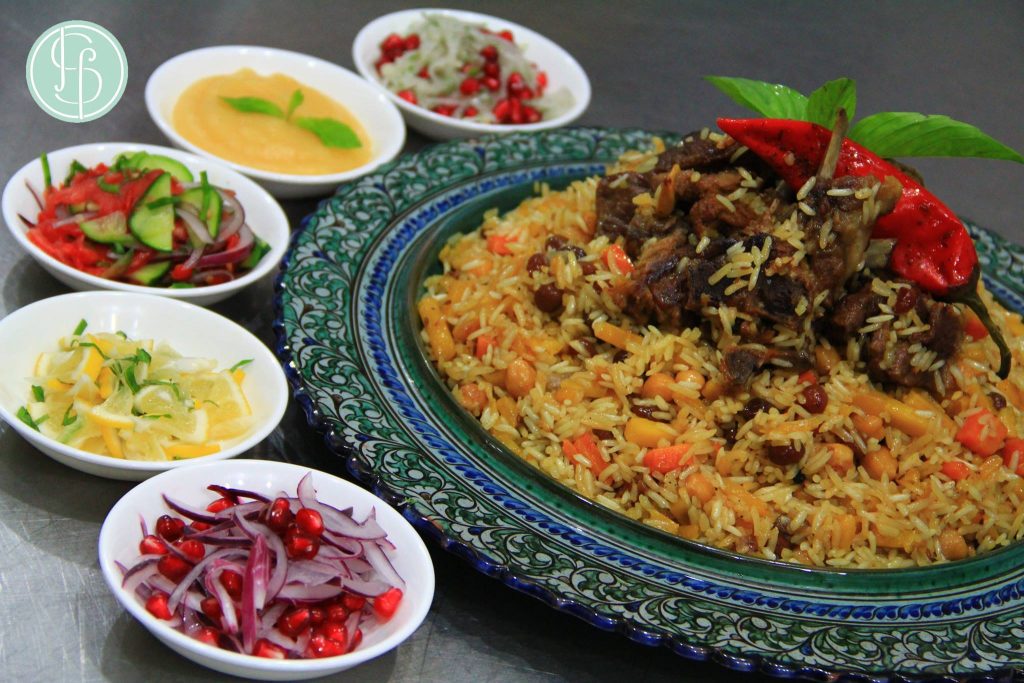
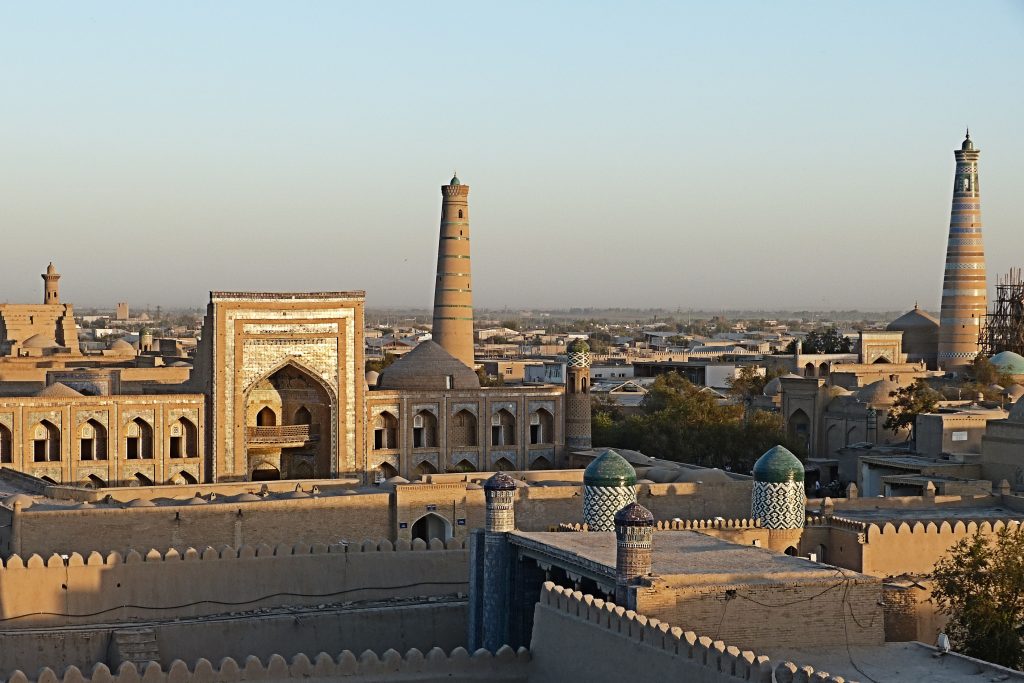
Gastro Bazaar brings the flavors of every region together — from legendary plov and freshly baked breads to the spice-laden specialties of the Silk Road cities.
A Culinary Journey Across Uzbekistan
For travelers arriving in Tashkent — a city that often surprises first-time visitors with its tree-lined boulevards, marble-columned metro stations, and sprawling Chorsu Bazaar — Gastro Bazaar is the perfect introduction to Uzbek culinary culture. Travel through the country without leaving the capital. Sample regional specialties, meet local chefs, and experience the incredible diversity of Uzbek cuisine. It is also a reminder that the best food in this country is rarely found in restaurants. It is found in homes, at roadsides, in bazaars, and at festivals exactly like this one.
Namangan International Handicrafts Fair
International Handicrafts Fair
November 2026 | Z. M. Babur Park, Namangan
Uzbekistan’s craft heritage is among the most extraordinary in the world. The intricate hand-embroidered suzani textiles that adorn homes from the humblest village to the grandest palace. The shimmering silk ikat fabrics woven in Margilan, where master dyers tie and resist-dye each thread before it ever touches a loom. The blue-glazed ceramics of Rishtan and Gijduvan, each carrying centuries of accumulated knowledge in their colors and forms.
Every November, the Namangan International Handicrafts Fair gathers master artisans from across the country — and increasingly from across the wider region — to celebrate the beauty of handmade art. Ceramics, silk, embroidery, woodcarving, jewelry, metalwork, and textiles are displayed and demonstrated by the craftspeople themselves. Visitors can watch a woodcarver shape an intricate Koran stand, see a ceramicist paint traditional motifs freehand, or observe a suzani embroiderer placing each stitch with the patient precision of someone following a tradition begun in childhood.
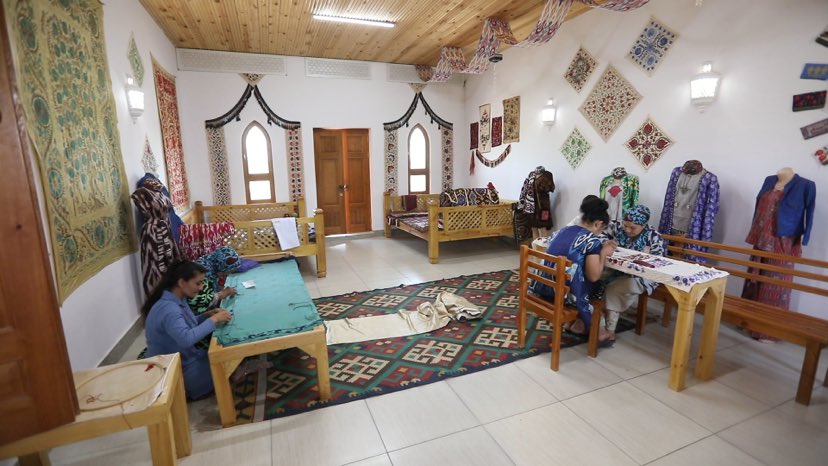
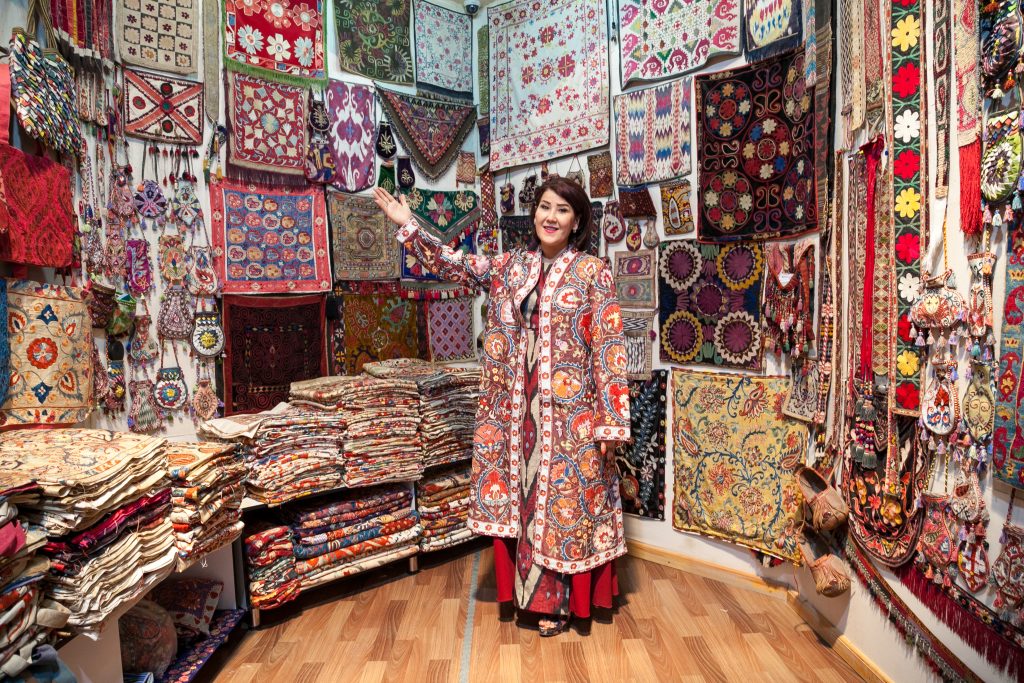
Every handmade piece tells a story — from vibrant suzani embroidery and hand-glazed ceramics to the intricate woodcarving traditions of Uzbekistan’s master craftsmen.
Meet Uzbekistan’s Master Craftsmen
Every handmade piece tells a story. Watch artisans create stunning works using techniques passed down through generations and discover the soul of Uzbek craftsmanship. For textile lovers, collectors, and anyone who believes that handmade objects carry a meaning that factory production never will, the Namangan fair is one of the most rewarding experiences in Central Asia.
Sukok Kabob Festival — Parkent Mountains
Sukok Kabob Festival
10 December 2026 | Parkent District, Tashkent Region
Most travelers think of Uzbekistan as a summer destination. The Sukok Kabob Festival is here to change their minds.
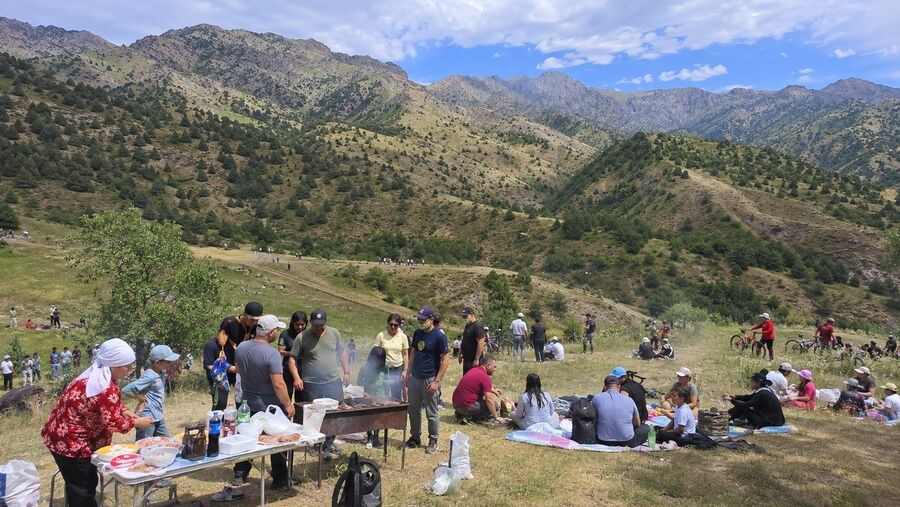
Mountain air, smoky grills, and genuine hospitality — families gather on the slopes above Parkent to celebrate the Sukok Kabob Festival, one of Uzbekistan’s most unique winter traditions.
Every December, as winter settles over the foothills of the Western Tien Shan mountains east of Tashkent, the mountain community of Sukok hosts a celebration that feels like a family gathering writ large. Smoky, freshly grilled kabobs are prepared over open fires using traditional recipes — marinated lamb, seasoned beef, tender chicken — alongside warm bread, mountain herbs, and the robust flavors of a cuisine shaped by altitude, cold air, and generations of pastoral life.
The setting is magnificent: snow-dusted peaks, pine-covered valleys, and crisp mountain air that makes every flavor sharper and every cup of tea warmer. Local musicians play, families gather around outdoor fires, and the hospitality is as natural and uncontrived as the landscape. Sukok offers travelers something rare — a genuine winter festival in Central Asia, far from the tourist trail, where the welcome is warm and the food is extraordinary.
Winter Flavors of Uzbekistan
Warm fires, mountain air, delicious kabobs, local music, and genuine hospitality make Sukok one of the most unique winter experiences in Central Asia. Escape to the mountains and enjoy an experience that most visitors to the region never discover — the quieter, deeper, more intimate side of Uzbek culture that reveals itself only when you venture beyond the ancient cities and into the landscapes that shaped them.
2026 Festival Calendar at a Glance
| Month | Festival | Location | Experience |
|---|---|---|---|
| August | International Melon Festival | Khiva | 160+ melon varieties, folk music, carving displays, artisan markets |
| August | Samarkand Plov Festival | Samarkand | Master chefs, giant cauldrons, regional plov varieties, cooking competitions |
| Aug–Sep | Grape Festival | Fergana Valley | Vineyard visits, grape tastings, dried fruits, harvest traditions |
| September | Gastro Bazaar | Tashkent | Regional cuisine from across Uzbekistan, chef demonstrations, tastings |
| November | Namangan Handicrafts Fair | Namangan | Ceramics, silk, embroidery, woodcarving, live artisan demonstrations |
| December | Sukok Kabob Festival | Parkent District | Mountain kabobs, open fires, winter landscapes, live music |
Plan Your Uzbekistan Festival Adventure
Each of these festivals offers something genuinely different, but they share a common thread: the unmistakable warmth of Uzbek hospitality, the pride of communities keeping ancient traditions alive, and the kind of sensory richness that stays with you long after you return home.
For more than thirty years, Silk Road Treasure Tours has been welcoming travelers from around the world to Central Asia’s most extraordinary celebrations. Our founder, Zulya Rajabova, grew up in the heart of Bukhara and has spent her career sharing the culture, cuisine, and craftsmanship of her homeland with visitors who want more than a sightseeing checklist. We know the best timing for each festival, the finest accommodations in every city, and the local artisans, chefs, and musicians who transform a well-planned trip into something unforgettable.
Whether you arrive in August for the sweetness of Khiva’s melons and the spectacle of Samarkand’s plov cauldrons, in September for the culinary diversity of Gastro Bazaar, in November for the soul of Uzbek craftsmanship, or even in December for the warmth of a mountain kabob festival — your journey can be designed around the celebration that speaks to you most.
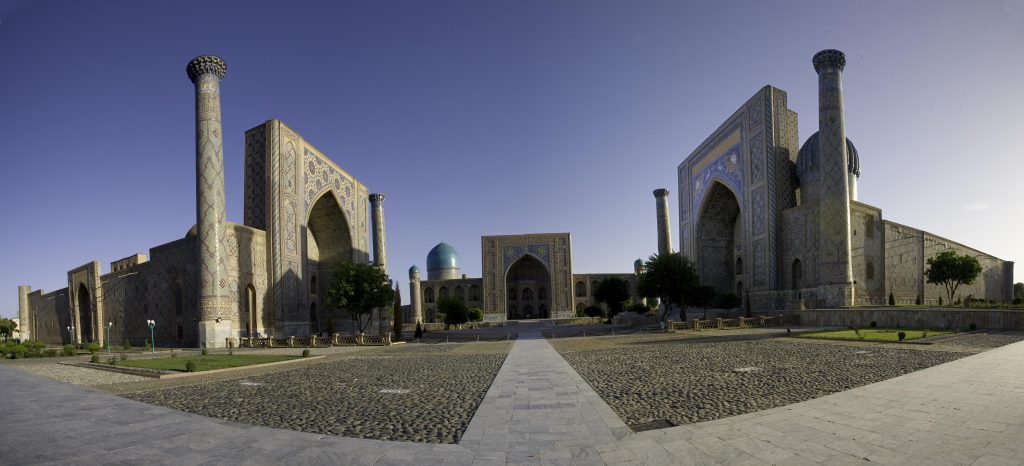
Registan Square, Samarkand — the jewel of the Silk Road and the backdrop to the city’s legendary Plov Festival.
Discover Uzbekistan Through Its Festivals
Music, food, crafts, history, traditions, and warm hospitality — Uzbekistan’s festivals are more than events on a calendar. They are invitations — to taste, to watch, to learn, to create, and to sit around a table with people whose traditions stretch back along the Silk Road for centuries. Every handmade piece tells a story. Every dish carries a recipe older than memory. Every celebration is a reminder that the most meaningful travel is not about the places you see but the people you meet and the experiences you share.
From ancient Khiva to vibrant Tashkent and historic Samarkand, every season offers unforgettable celebrations. Which festival would you like to experience first?


Leave a Reply